Wet Paws, Wet Beds: A November Pet-Laundry Routine for Deptford Flats
November in Deptford has a particular smell. It is wet leaves, pavement grit, a bit of Thames damp and, if you have a dog, the unmistakable aroma of a walk that ended in Deptford Park with a very happy animal rolling in something unspeakable. Cats are tidier, but their beds still collect fur, dander and that faint biscuity smell that appears out of nowhere.
The good news is that pet laundry does not need to be complicated. It needs a bit of rotation, a sensible approach to fur and odour, and a realistic drying plan for a flat where the airing cupboard is already full. Here is how we would tackle it from the counter on Deptford High Street.
Start with the sniff test, not the calendar
Pet bedding does not stick to a neat weekly schedule. A dog that has been out in the rain twice a day will need its walk towel washed far more often than a cat that sleeps on the same sunny windowsill all week. Use your nose and your hands as much as the care label.
As a rough guide for this damp season:
- Walk towels: wash every one to two uses, or daily if they are properly wet and muddy. A soaked towel left in a bag is a smell factory.
- Throws and sofa covers: once a week if your pet has access, especially if they like to flop down straight after a walk.
- Pet bed covers: every two weeks as a baseline, weekly if there is a noticeable whiff or visible hair build-up.
- Crate pads and cat beds: fortnightly, or weekly for older pets and anyone prone to little accidents.
- Foam cores and filled cushions: spot-clean and air monthly rather than soaking the whole thing.
If your pet is a senior, a puppy or recovering from illness, shorten those intervals. It is easier to wash a spare cover than to rescue a soggy bed.
Know what you are washing before it goes in
Most pet bed covers are cotton, polyester or a fleece blend. Many will cope with a 30°C or 40°C cycle, but check the label first. Fleece likes a cool wash. Wool blankets need a wool cycle and no sudden temperature changes. Faux fur can mat if it is treated roughly, so use a gentle spin and brush it back into shape while it is still slightly damp.
Waterproof liners and padded bases are the tricky ones. If the label says sponge clean only, believe it. A washing machine can break down the waterproof layer, and then you have a bed that holds damp against the floor. Zip covers closed before washing, fasten any velcro and check seams for splits. A stray bit of stuffing can wrap itself around the drum and make a small problem much larger.
Deal with the fur while it is dry
This is the step most people skip, and it is the one that makes the biggest difference. Wet pet hair clings to fabric like glue. Dry hair is much easier to remove.
Take the bed or throw outside and give it a good shake, then use a rubber glove, a squeegee or a sticky roller to lift the fur. A rubber-bristled brush works well on fleece. Vacuum the cover before it goes anywhere near the machine. Empty the vacuum afterwards, because a full canister just redistributes the problem.
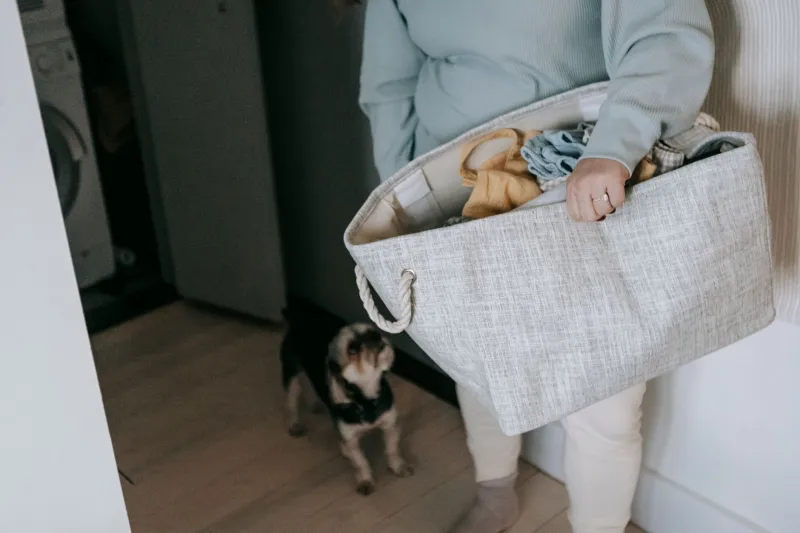
For wash-and-fold drop-offs, give pet bedding its own bag and label it clearly. We are happy to handle bulky beds and muddy towels, but it helps to know what is inside. A quick ring ahead is sensible if you have a large orthopaedic bed or a crate pad that barely fits through the door.
Treat odour gently, not with a bonfire
Strong smells need patience rather than a boil wash. Use a detergent designed for pet odours or a biological detergent if the fabric allows. A short soak with a little bicarbonate of soda can help neutralise smells, and an extra rinse lifts out the residue that holds odour in the fibres.
Skip fabric softener on pet bedding. It coats the fibres, reduces absorbency and can trap smells rather than remove them. Avoid bleach on anything your pet sleeps on. Wash pet items separately from human towels and underwear, and wipe the machine seal and clean the filter afterwards. If you use a shared laundrette, leave the drum and detergent drawer tidy for the next person.
Drying is the real Deptford test
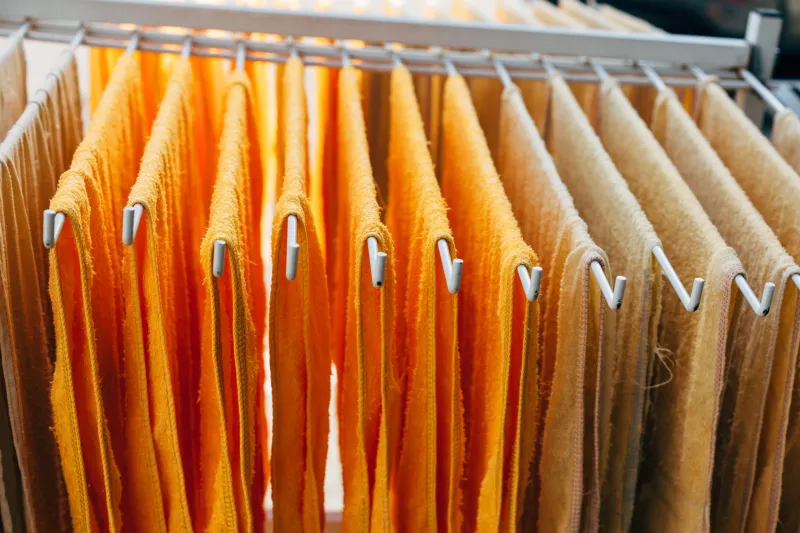
A damp pet bed that never dries properly will smell worse than it did before. In a small flat, aim for air movement rather than a race against the radiator. A drying rack near a window with a fan or dehumidifier works better than draping everything over a warm radiator, which can leave the middle of a thick bed stubbornly damp.
If the care label allows tumble drying, use a low heat and add a couple of dryer balls to break up clumps. Bulky beds are often better dried at the laundrette, where a larger machine can get them properly dry in one go. Always make sure the bed is completely dry before the cover goes back on. A faint musty smell at that stage means it needs more time, not more perfume.
A simple November rotation
Keep two covers for the main bed if you can, plus a dedicated pile of walk towels by the door. Wash the towels midweek, the throw at the weekend and the bed cover on a rota. It sounds fussy, but it is far less work than trying to rescue everything on a Sunday evening.
Muddy paws are part of living here. So are fresh blankets, a sofa you can sit on and a flat that smells of laundry rather than wet dog. If the pile gets too big, bring it down the High Street. That is what the big machines are for.