The Warm Room on the High Street: A Laundry History of Deptford
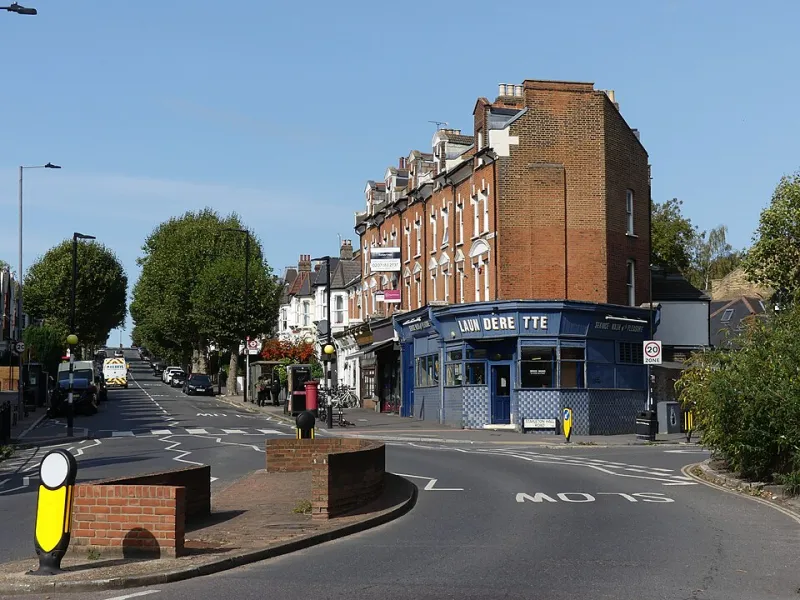
Photo: John Kingdon , CC BY-SA 2.0, via Wikimedia Commons
A launderette is a warm room. That sounds simple, but it is the detail that lingers. On a wet Tuesday in Deptford, with the market umbrellas dripping and the buses hissing past, the launderette is a place where the air is soft and the windows steam up. You can stand there with a bag of wet washing and feel, for a moment, that the day has paused.
That warmth is not just about tumble dryers. It is about a particular kind of local life that has been shaped by laundry for well over a century. Deptford High Street has seen washhouses, hand-cranked mangles, coin-op laundrettes, service washes and now wash-and-fold bags booked between school runs. The technology has changed. The ritual has not entirely.
Before the machine: washing as a public act
In the Victorian and Edwardian city, laundry was often too big for the home. Many terraced houses had no piped hot water, no space for a copper and certainly no spare room for drying. Public baths and washhouses were built in London and other British cities as a matter of public health, offering clean water, heat and somewhere to wash both bodies and clothes.
The washhouse was not a romantic place. It was hot, heavy work, with steam, soap and a queue for the copper. But it was also communal. Women carried bundles through the streets, waited their turn, swapped news and kept an eye on each other’s children. Laundry was a chore, but it was a chore performed in public. The washhouse was part utility, part noticeboard, part survival network.
Deptford’s position by the river and its dense streets of workers’ housing made laundry a practical headache. A family might send washing out, do it at home in a cramped scullery or rely on a public washhouse. Either way, clean clothes were a visible sign of effort. A line of shirts in a yard was a small public statement.
The launderette arrives
The coin-operated launderette changed the rhythm again. In the mid-twentieth century, laundrettes spread across Britain, offering machines that did the hard work without the need for a domestic boiler or a back garden. For people in flats and rented rooms, they were not a luxury. They were infrastructure.
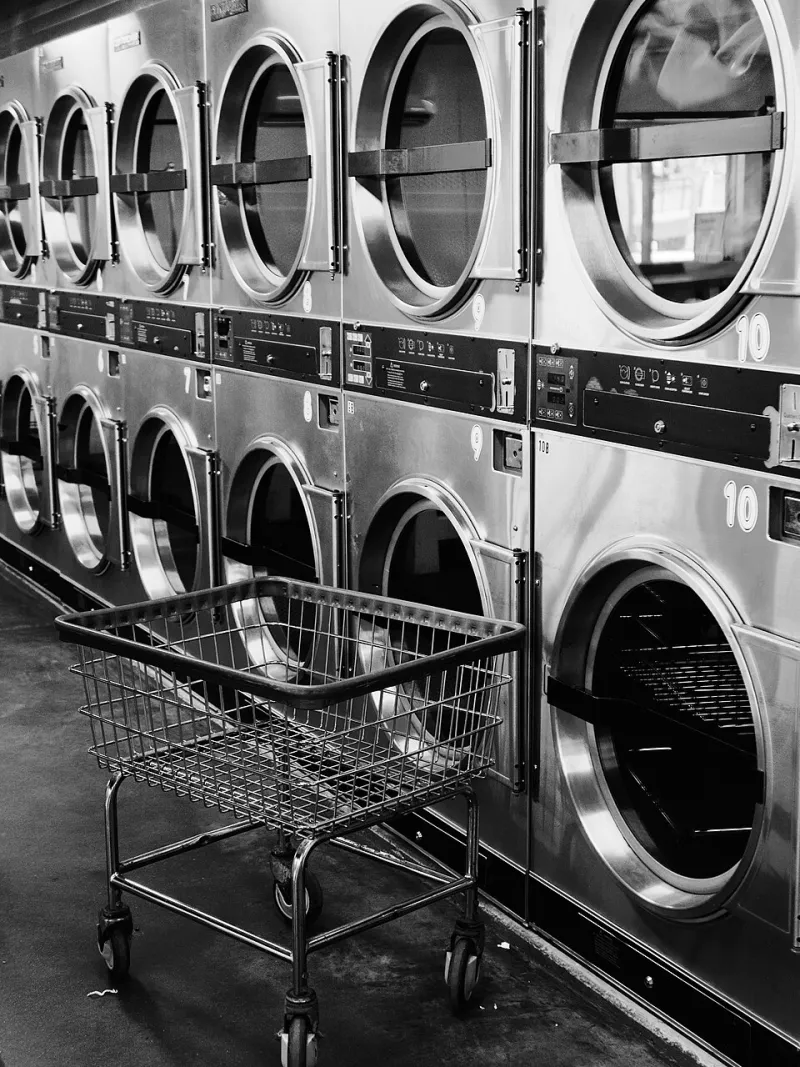
A High Street launderette was a place of queues, plastic bags and the soft thump of drums. You learned which machine ran hot, which dryer took two goes, and which stool was best for reading a paper. You might bump into a neighbour you had not seen for weeks. You might hear about a job, a market stall closing, a family wedding. The laundrette was a small civic living room with a coin slot.
In Deptford, that social role fit the High Street perfectly. The market brought people together; the launderette kept them there for forty minutes. It was a place to wait, and waiting together is one of the quieter forms of community.
The home machine and the great indoor drying problem
By the late twentieth century, home washing machines became ordinary. The weekly trip to the launderette stopped being the default for many households. Laundry moved back into the flat, the kitchen, the bathroom. On the surface, it became private again.
But Deptford’s housing stock told a different story. Terraces split into flats, conversions with no outdoor space, rented rooms with a washer but nowhere to dry. The home machine solved washing and created a new problem: damp. Winter bedding, duvets, towels and heavy jumpers do not fit neatly into a small flat’s airing cupboard. A drying rack in the living room can turn a whole flat into a steam room.
So the launderette did not disappear. It changed what it was for. Instead of every shirt and sheet, people started bringing the big stuff: duvets, curtains, winter coats, bedding after a bug, the wash-and-fold bag after a busy week. The public laundry became a pressure valve for private homes.
What the laundrette does that a flat cannot
In 2026, the practical case is still strong. A launderette has capacity, heat and ventilation. It has dryers that can take a duvet without turning the living room into a condensation experiment. It has people who know that a wool jumper needs low heat and that a sequinned top should not go anywhere near a hot drum.
There is also the simple matter of time. A wash-and-fold bag dropped off on the High Street can buy back an evening. For shift workers, parents, carers and anyone in a flat with a broken machine, that is not laziness. It is logistics.
And there is the company. Not every visit needs a conversation, but the possibility is there. A friendly face at the counter, a bit of local news, a shared groan about the weather. The High Street has changed around us, with new flats and new shops, but the warm room still does a job that the home machine cannot always do.
Ghosts and traces
The old washhouses are mostly gone, or hidden inside other buildings. You might walk past a site without knowing it once held copper boilers and queues of women with bundles. The launderette signs of the later twentieth century have thinned out too. Some have become cafés, some have been converted, some have simply closed.
But the traces are there in the ritual. The bag by the door. The dash for coins. The wait. The warmth. The small relief of folding a clean sheet. Laundry is one of the few chores that everyone shares, regardless of income or background. It is also one of the few that has always needed somewhere to happen.
Why it still matters in 2026
The local laundrette is not a museum piece. It is a working part of Deptford life. It matters because flats are small, because dryers are rare, because December is wet and because duvets do not wash themselves. It matters because a High Street is not only shops and buses; it is also the places where ordinary life gets done.
So next time you drop a bag at the counter, you are taking part in a long local story. The steam, the soap and the queue have changed shape, but the warm room on the High Street is still doing what it has always done: making the week a little lighter, one clean load at a time.