The Radiator Truce: A Deptford Housemate's Guide to Sharing a Wash Without Losing a Friend
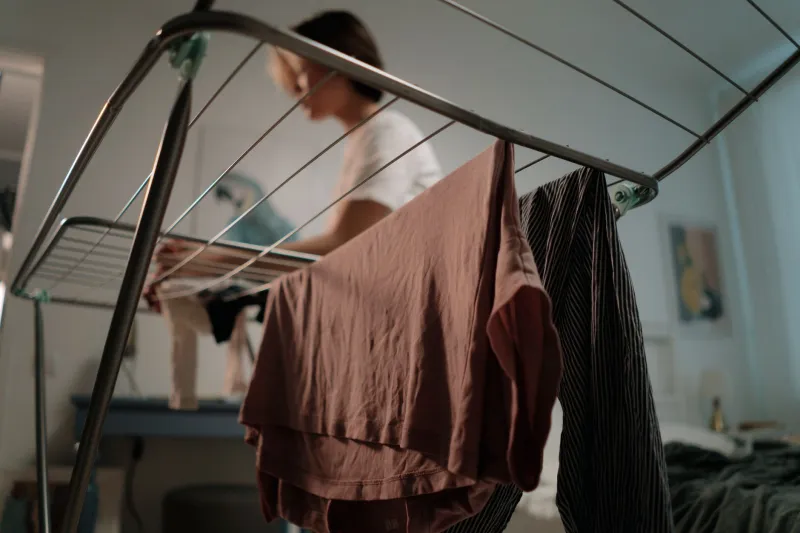
November in a Deptford flat share has a particular smell. It's damp wool, radiator dust and the faint whiff of a towel that has been 'airing' on the back of a chair since Tuesday. The windows are shut, the airer is full, and someone has just put a dark load on at 10pm without asking. Laundry, in a small flat, is never just laundry. It's territory.
The good news: you don't need a personality transplant or a new housemate. You need a treaty — a short, sensible set of agreements that keeps clean clothes moving and friendships intact. Call it the radiator truce.
Map the airer before you argue about it
Most shared-flat laundry disputes aren't about washing. They're about space. In a two-bed flat off Giffin Street or a converted terrace near Friendly Street, the airer is the most contested square metre in the property.
So treat it like a shared resource. One evening, sit down with a cup of tea and sketch the flat. Where can an airer go without blocking the bathroom door? Which corner gets the most airflow? Is there a windowsill that fits a folding rack?
Then agree two things: a maximum airer residency (48 hours is a decent default) and a clear signal for 'this is dry, please take it down'. A coloured peg works. So does a note on the fridge. The point is to remove the guesswork, not to build a bureaucracy. If your flat has a dehumidifier, decide who refills it and when it runs. If it doesn't, a small one from the market is often cheaper than a winter of damp towels and resentment.
Draw basket boundaries, kindly but firmly
The mixed basket is the original sin of shared laundry. One housemate's gym kit, another's work shirts, a third's tea towel, all crammed together because nobody wanted to be the person who said 'these are mine'.
Fix it with a simple rule: everyone has one basket, labelled or at least recognisable, and nothing goes in the machine unless it's in a basket. The floor pile is not a basket. The chair in the corner is not a basket. The basket is the basket.
If you're short on space, collapsible fabric baskets that live under a bed or on top of a wardrobe work well. And if someone is going to the launderette anyway, a single wash-and-fold bag per person is easier to manage than three separate piles. At our counter on the High Street, we've seen every variation of the shared-flat drop-off, and the ones that work best are the ones where each housemate's name is on the bag.
Declare a sock amnesty
Single socks are the flotsam of shared living. They accumulate under beds, behind radiators and in the pockets of coats. Nobody claims them, everybody recognises them.
Once a month, empty the lost-property corner into a tin or a drawer and give everyone five minutes to reclaim their orphans. Whatever is left goes to the charity shop or the textile recycling. No guilt, no hoarding. A sock amnesty is not a failure of organisation; it's a routine maintenance task, like descaling the kettle.
While you're at it, agree on a sock protocol for the wash itself. Mesh laundry bags cost very little and stop the lone-sock problem before it starts. One bag per person, clipped to the basket handle, and the machine stops eating your socks for sport.
Handle delicates without passive aggression
There is always one housemate whose knitwear says 'hand wash cold' and another whose idea of a delicate wash is 'put it in with the jeans and hope'. This is where notes start appearing on the kettle.
Instead of going silent and furious, agree a visible system. A mesh bag labelled 'delicates — 30°C' is clearer than a Post-it. A shared note on the fridge or a WhatsApp pin saying 'please don't tumble the wool' is not nagging; it's information. If someone has a particularly precious item, they can keep it separate and wash it themselves, or use a wash-and-fold service that handles delicates properly.
The treaty should also cover the tumble dryer, if you have one. Wool, viscose and anything with elastic should not go near it. A simple list stuck to the machine saves a lot of quiet seething.
Know when a pickup is cheaper than a fight
There's a point in every shared flat when the laundry maths stops working. The airer is full, the weekend is gone, and the only available slot for a wash is 11pm on a Tuesday. That's when a wash-and-fold pickup stops being a luxury and starts being a sensible split.
Do the sums together. A wash, dry and fold service costs money, yes. But so does replacing a shrunk jumper, buying a second airer, or spending three hours a week negotiating whose turn it is. If the flat is busy, if someone works shifts, if the boiler is temperamental, a weekly pickup can take the pressure off everyone. Divide the cost by the number of housemates and it often looks less like an extravagance and more like a peace dividend.
We collect and deliver around Deptford, so it's easy to fold into a Friday routine. One bag out, one bag back, and nobody has to referee the airer at midnight.
Write it down, then forget about it
The final clause of any good treaty is that it should be short enough to remember. Five points on the back of an envelope is plenty: airer time limit, basket rule, sock amnesty date, delicate-wash warning, and the number for the laundry pickup. Stick it to the fridge, review it after a month, and adjust.
Shared laundry in a small Deptford flat will never be effortless. But it can be friendly. And in November, when the windows are shut and the radiators are on, friendly is worth more than a perfectly folded towel stack.